Follow your league
A league turns the events you already play into a season-long race, and you don't change a thing about how you play or score. Turn up, collect points, and don't worry about a bad day in week three, because only your best rounds count. Here's how to join, read the table and see how the points add up.
1. Find your league
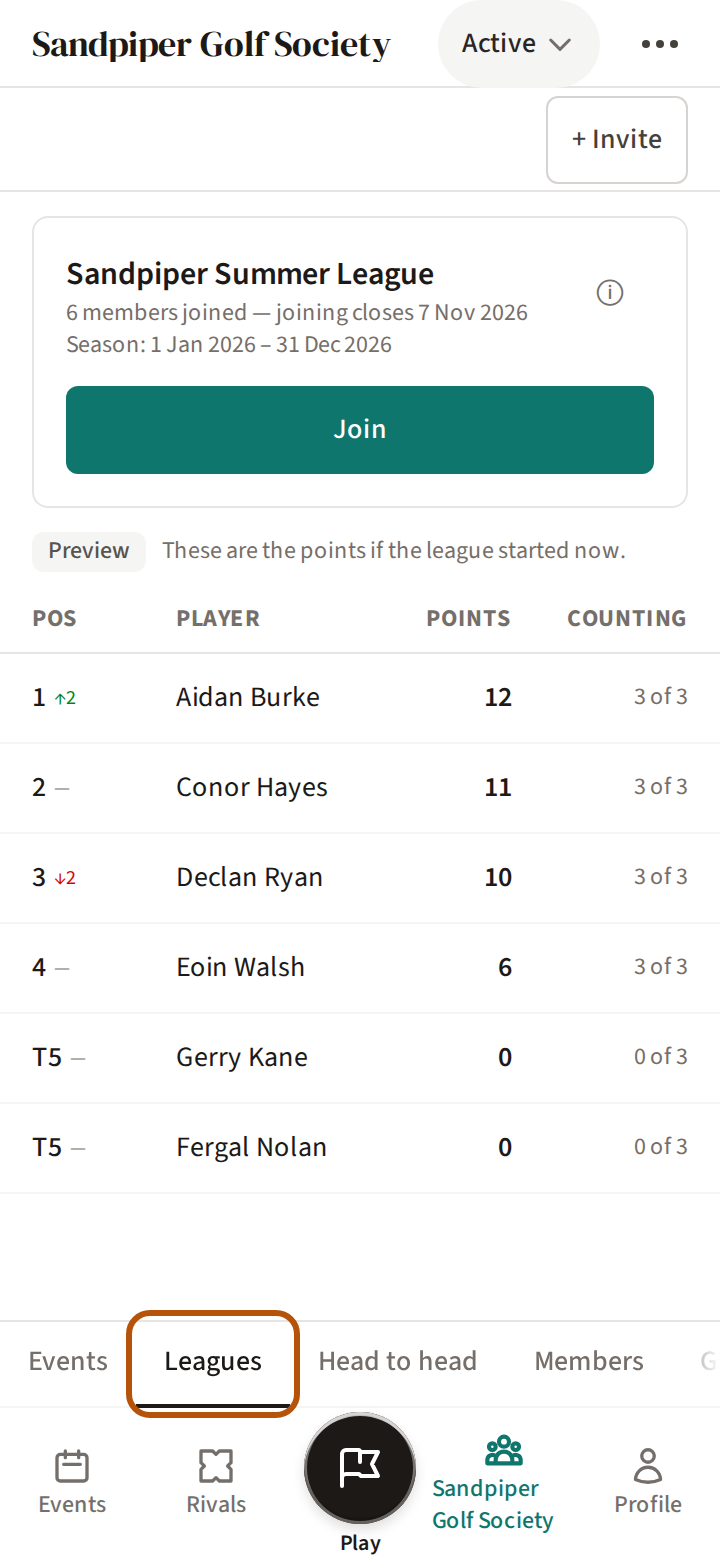
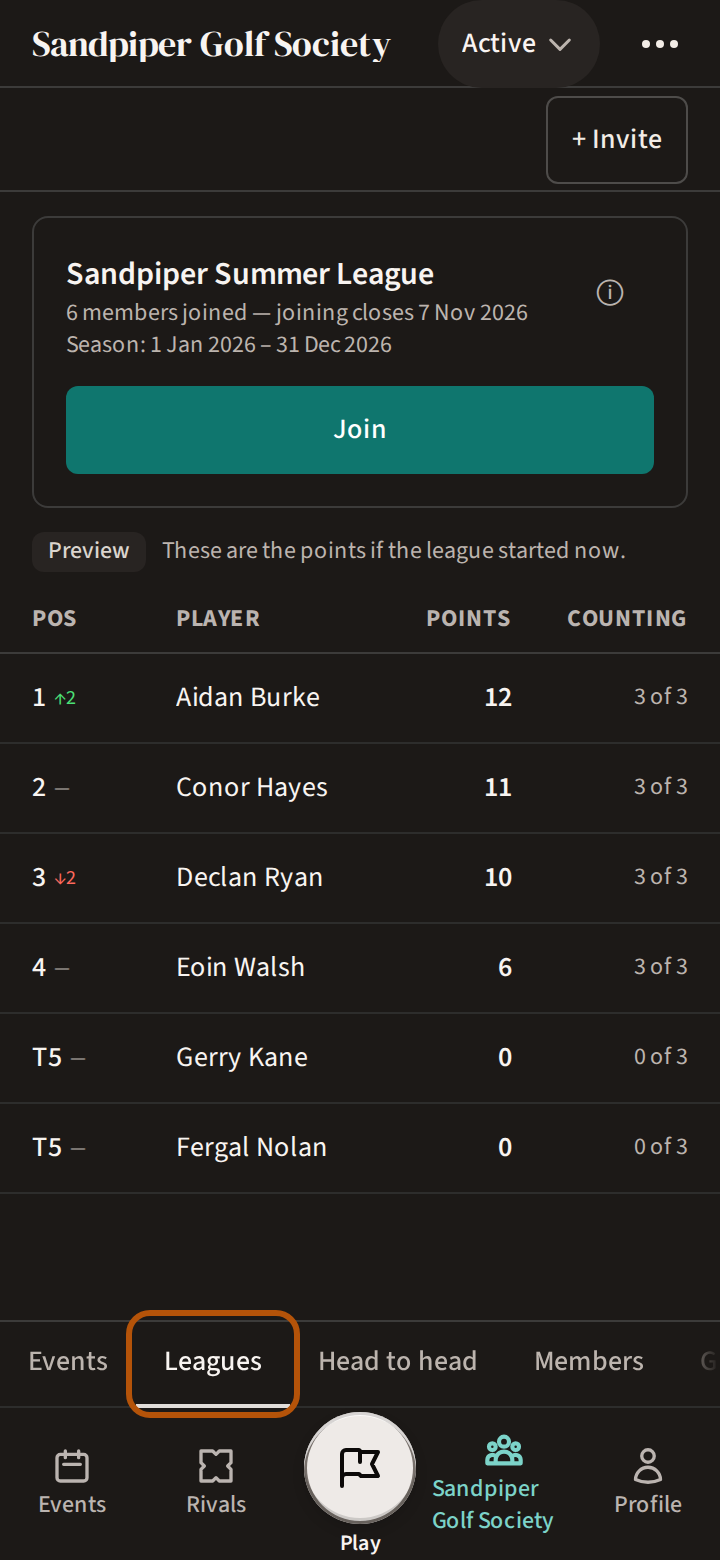
Open your flock (your group) and choose its Leagues section. It is there once the flock has a league. You can also reach every league you are in from Rivals, on the bar.
2. Join it
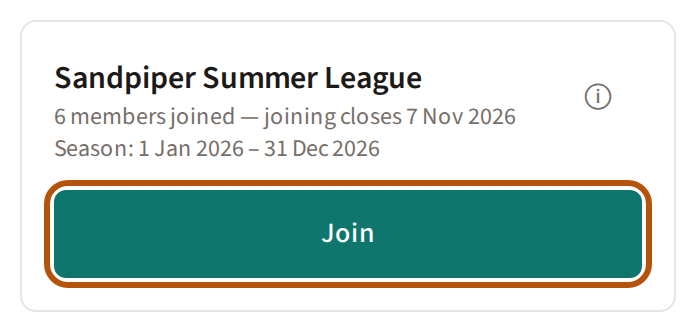
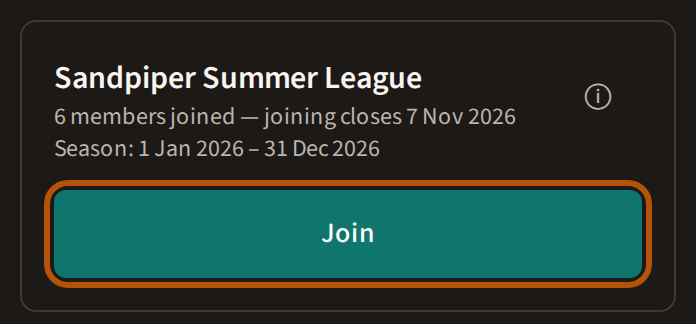
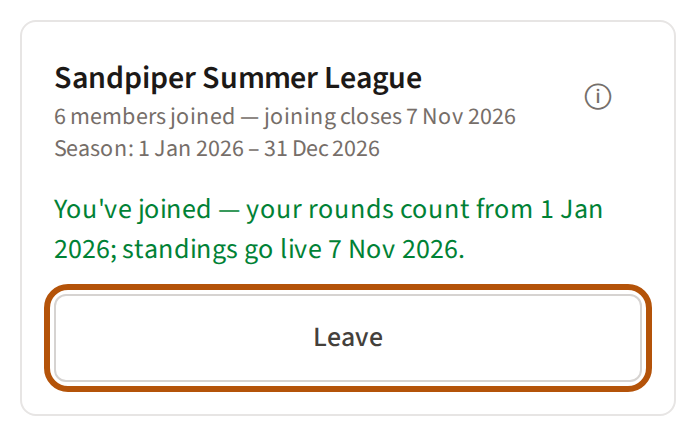
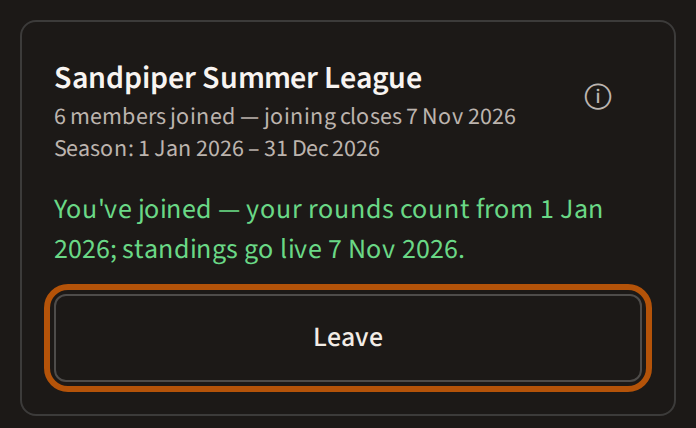
Only members of the league earn points, so join first: press Join on the league's card at the top of its section. Some leagues ask the organiser first — then the button reads Request to join and the card says so until they answer. While a league is open to join, your Play button shows League open. Once you have joined, the card says so, with Leave on it.
3. Read the table
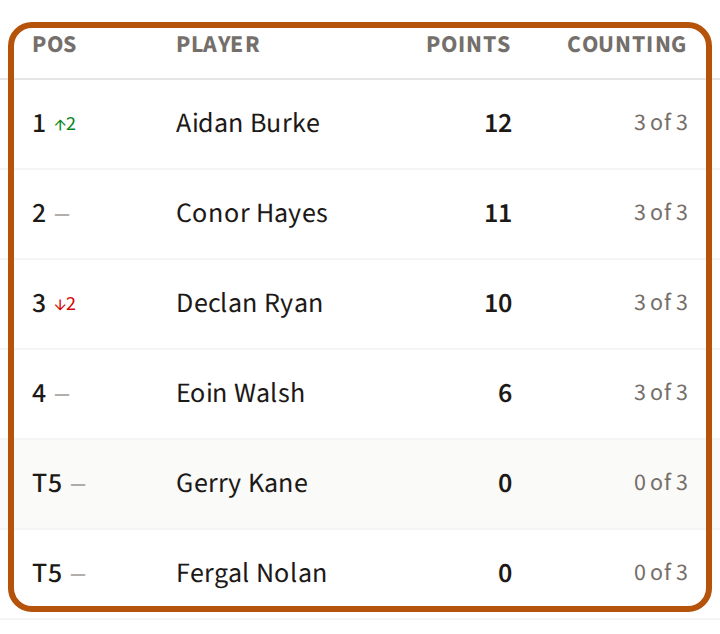
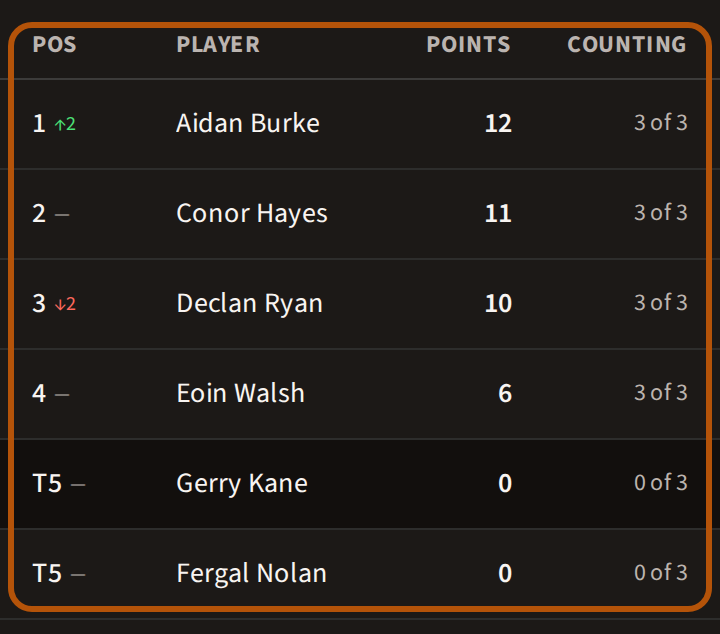
- Pos — your place. The small arrow beside it shows how far you moved at the last event.
- Points — your league points so far.
- Counting — how many of your results count towards them (see below).
Before scoring starts, the table is marked Preview: it shows the points everyone would have if the league had started already. Nothing in it counts until scoring starts. The ⓘ on the league's card explains how the league works.
Press any row to see that player's event-by-event breakdown — which results are counting and which are dropped.
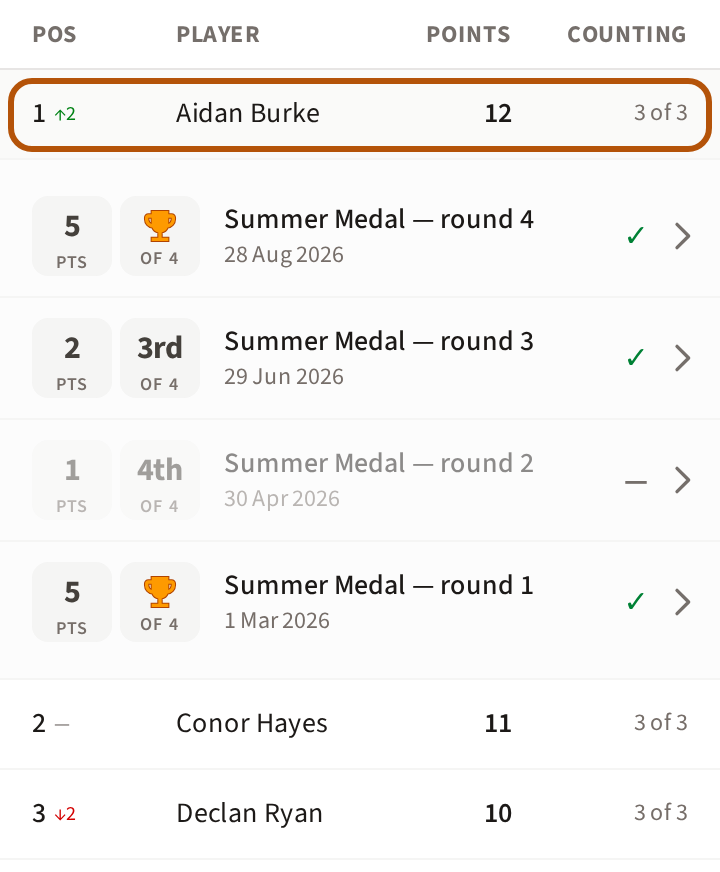
On any completed event you played in, the Leaderboard shows a small card under the standings — "You finished Nth → X league points". Press it to go straight to the league table.
How you earn points
Every time you play a qualifying event — a Saturday fourball, a midweek roaming round, the annual trip — you earn league points for where you finish. You do not change how you play or how you score; the league keeps a running tally all season, and the player with the most points at the end wins.
Bigger fields are worth more, because beating more people is harder — and the field is everyone in the event, not only the league members in it. Here is a typical society range:
| Pos | 4 players | 6 players | 8 players | 10 players |
|---|---|---|---|---|
| 1st | 5 | 8 | 12 | 14 |
| 2nd | 3 | 6 | 9 | 11 |
| 3rd | 2 | 4 | 7 | 9 |
| 4th | 1 | 3 | 5 | 7 |
| 5th | — | 2 | 4 | 6 |
| 6th | — | 1 | 3 | 5 |
| 7th | — | — | 2 | 4 |
| 8th | — | — | 1 | 3 |
| 9th | — | — | — | 2 |
| 10th | — | — | — | 1 |
Last place always earns 1 point, so showing up always beats staying home. Players who tie take the same place, and each earns that place's full points.
Your best rounds count
Only your best results count towards your total. Up to five events, your best 3 count (all of them, if there are fewer). From the sixth, roughly every third event adds one more: 4 count at 6–7 events, 5 at 8–10, 6 at 11–13. Your league's organiser can fix the number instead. A bad round in week 3 does not matter if you played well the rest of the season — and a result that is dropped today can count again later, as the number counting grows.
If you have played fewer rounds than the number counting, every one of them counts. And you do not need to play every event to win: with 10 events, 5 count — so someone who plays 6 of them can beat someone who played all 10, if their best 5 are strong enough.
Signature events count for more
Your flock's signature events — the annual trip, the captain's prize, the season finale — carry 1.25× points. Win one in a field of 8 and you earn 15 points instead of 12.
What qualifies
Any event inside the season counts, as long as it has a singles competition and enough league members playing — at least 3, 4 or 5 depending on the league's size. Roaming rounds count too. Playing means posting a score: someone on the tee sheet who never returns a card does not help an event qualify. A league's admin can also set a fixed minimum when setting it up.
Still stuck? Tell us and we will help.